
A guest post by Joy Lanzendorf
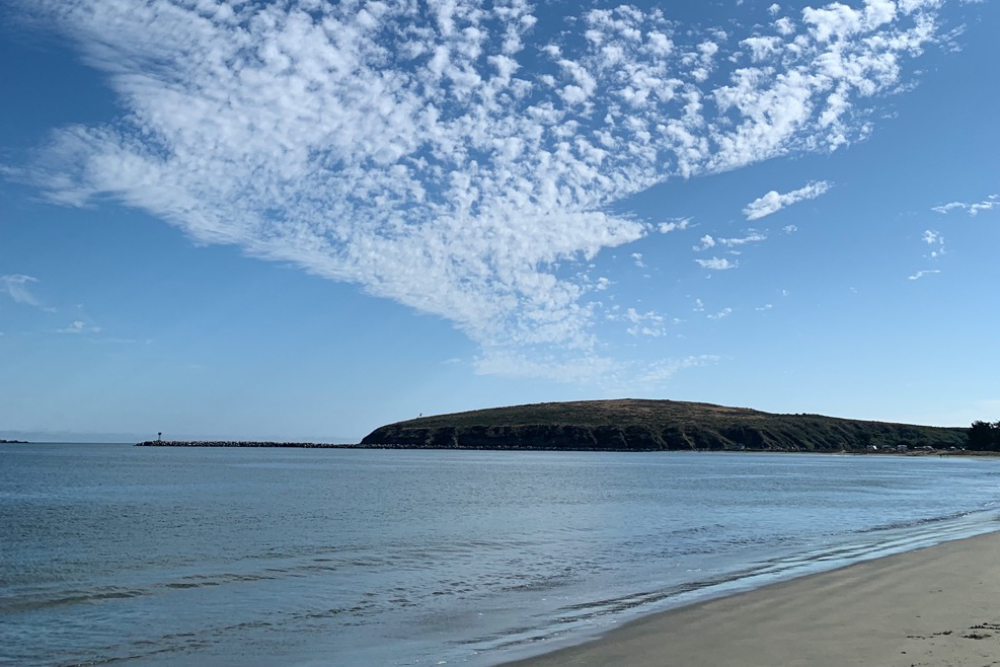
On a sunny January afternoon in Bodega Bay, some 70 miles north of San Francisco, the White Abalone Culture Lab is humming with activity.
It’s spawning day. Alyssa Frederick, the lab’s program director, invites me into an industrial room full of troughs and tubs of bubbling seawater. The abalone program is tucked away in the UC Davis Bodega Marine Laboratory, a research facility devoted to studying ocean and coastal health. The goal is to bring the endangered sea snails, known for their iridescent shells and delicate meat, back from the brink.
Inside, a mix of volunteers and biologists stand in the aisle holding the abalone, some as big as coconuts. They’re measuring, weighing, and performing health diagnostics. If the animals are deemed robust enough, they’ll be moved into buckets filled with a “love potion” of hydrogen peroxide, which stimulates the females to expel eggs and the males to release sperm.
The researchers here hope that the 110 white abalone on the premises will successfully produce offspring. They’ll then nurse the marine mollusks until they’re big enough to be released into their native waters along the southern California coast.
It’s part of a 25=year effort to repair the damage from overfishing and other factors to the species. In 2001, the year the first artificial spawning program took place, only one percent remained – about 2,000 individuals.

If left alone in the wild, they were doomed to go extinct within a decade. The white abalone became the first marine invertebrate to be listed as an endangered species and a program was established to restore their numbers.
Abalone reproduce by “broadcast spawning,” which is when the males and females release their reproductive cells into the ocean. When these gametes meet, they create larvae, which swim around in the water column for a week or two before settling on rocks. Slowly, over its lifespan of 35-40 years, the microscopic sea snails can grow up to 10 inches wide.
In 2001, the remaining white abalone were too far apart to spawn on their own. The White Abalone Program started that year when 18 wild snails were brought into a southern California facility. While initial spawning worked, a fatal disease called withering syndrome swept through and killed the animals. In 2011, the spawning program moved to the Bodega Bay lab, as the withering syndrome had yet to appear in Sonoma county waters. Since then the White Abalone Culture Lab has released over 20,000 animals into the ocean.
Chances are high that the white abalone can be saved. One spawning produced more than 12 million fertilized eggs. Only a portion of that larvae will survive, but with luck, many more will eventually be returned into the wild.
If that continues for long enough, Frederick believes the white abalone can someday thrive again. And that, she explains, is why she’s happy to make restoring the giant sea snail her life’s work.
“It’s just so hopeful,” she says. “So many people studying the ocean or studying endangered species have a really hard job. They have to watch the ocean degrade or they’re watching a species go extinct. In this situation, we get to actually restore the white abalone. It’s kind of amazing.”
Author and journalist Joy Lazendorf first published this excerpt in The Guardian. Click here to read the complete article on “Sex and the Sea Snail: how a plucky marine lab brought a mollusk back from the brink.”
Photo credits: Jessica Lee, UC-Davis; earth.com