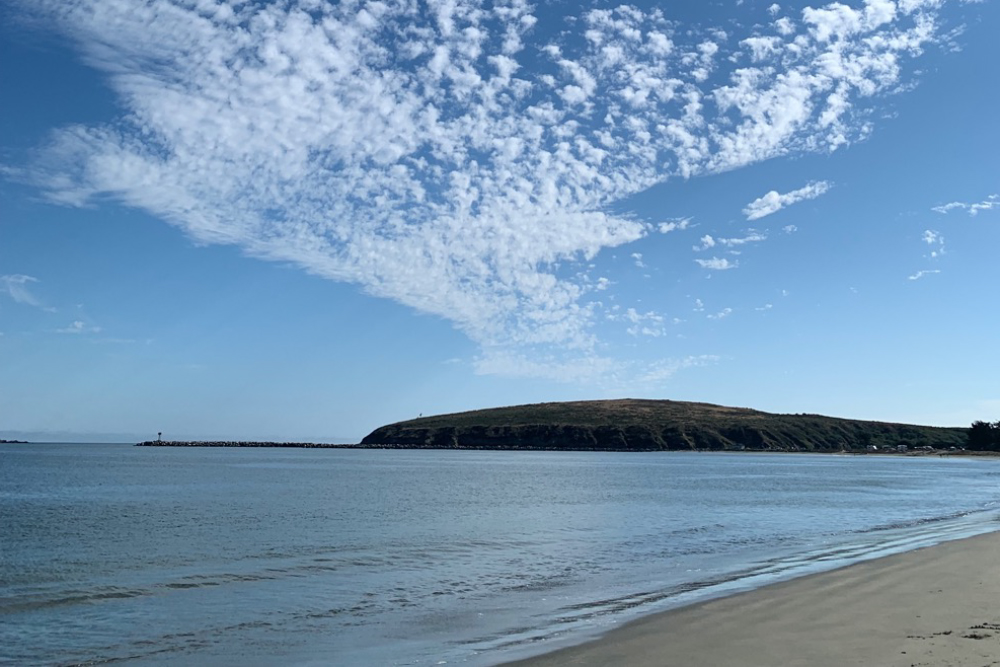
Jogging on a local beach, I spot a knot of people at the water’s edge. A few feet away, in thigh-high waves, a man in a wetsuit holds a silver fish, wriggling in his hands. It seems unremarkable, until I notice its teeth: row upon row, gleaming white and razor sharp. Out of its element, writhing with all its might, the young shark looks strangely vulnerable. My first— and only—encounter with one of the most formidable predators on the planet makes me wonder: Should we fear them—or fear for them? The answer is both.
Sharks
The Season of the Shark
‘Tis the season, not just for spooky ghosts and goblins, but far scarier creatures that prowl along the California coast. During Sharktober, which extends from September to November, great white sharks, the largest predatory fish on the planet, are on the hunt.
Every year these lords of the deep migrate more than a thousand miles from a zone east of Hawaii known as the “White Shark Cafe.” Their destination: the Red Triangle, a swath of ocean stretching from Bodega Bay in the north to the Farallones Islands in the west and Monterey Bay in the south. The cold, nutrient-rich waters of the Greater Farallones National Marine Sanctuary nourish a rich array of marine life, including seals and sea lions that lure great whites eager to feed heavily and build strength and stamina for the winter months.