
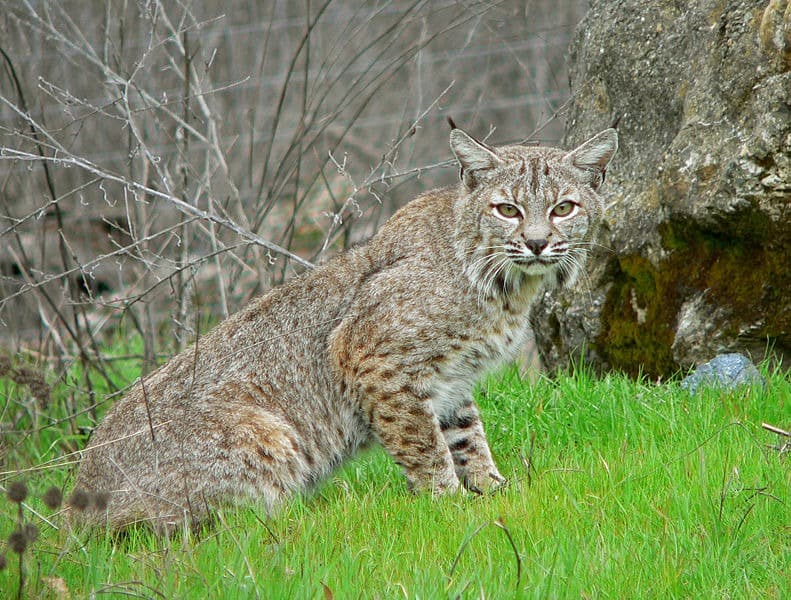
I was tying my shoelace on a seaside path when I sensed something nearby—a paw pressing lightly into the dirt. A dog’s, I assumed. But then I noticed its hefty size and the soft blur of fur at its edges. Glancing upward, I found myself staring into the golden eyes of a bobcat.
For a moment, we simply regarded each other—mammal to mammal, each out of place in the other’s world. Then I did the least dignified thing imaginable: I tried to scream but could manage only a squawk. The bobcat lifted its head and sauntered away with what seemed like utter disdain for a strange, noisy human.
Crouching, I examined its print: four toes above a rounded pad. My naturalist’s mantra surfaced. Dimmi! I insisted silently. Tell me!
My quest to learn more about my tawny neighbor led to certified animal tracker and instructor Jim Sullivan, author of Dirt Time: Finding Meaning in Nature. In an introductory class, artist and scout Ginger Hadley unfurled a long green cloth. Across it she had painted a shimmering collage of local tracks: a bobcat’s rounded feline paw, a raccoon’s tapered fingers, a fox’s tidy print, a deer’s elegant hoof.
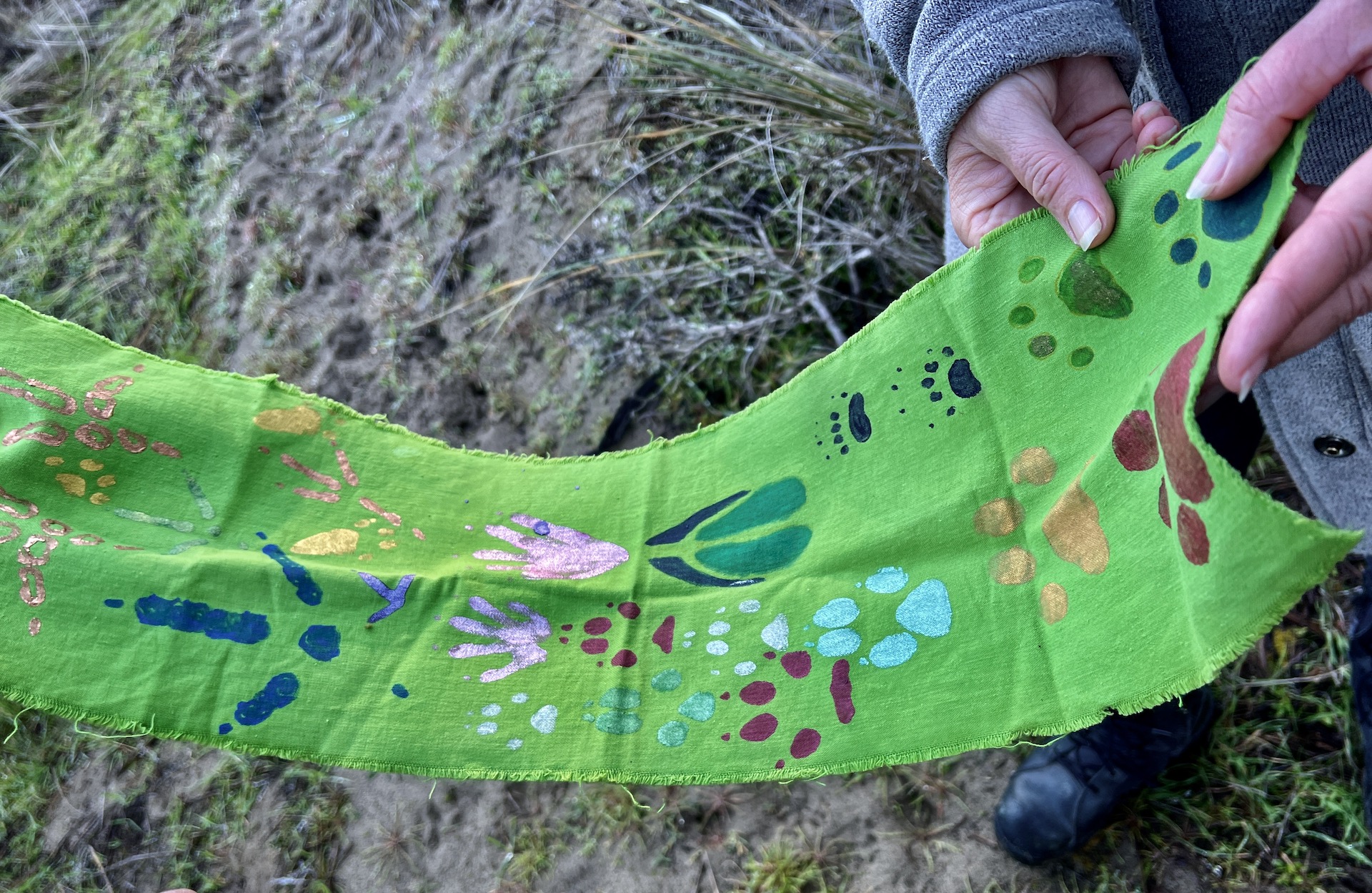
Overlooked by most hikers, such markings reveal far more than a creature’s identity. Paws reflect millions of years of evolution, dating back to the fins of aquatic ancestors. As their descendants transitioned to land, these structures adapted for terrestrial challenges–walking, climbing, hunting, fleeing, fighting.
“The goal isn’t just to recognize a specific animal, but to get inside its head,” says Sullivan, who has spent the greater part of a century exploring Northern California’s backcountry. “Tracking can be a portal into how an animal moves and lives in its world.”
Predators’ paws are instruments of stealth and power. With deliberate steps on its padded feet, a bobcat can cross a field with barely a ripple in the grass. Its claws—its most lethal tools—stay sheathed until the moment to pounce. Fox prints, like those of other canines, clearly reveal claws. For the gray fox, they provide an extra edge: the ability to grip a tree trunk and scramble upward, out of sight and danger.
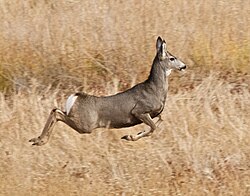 While predators’ paws speak of strength and stealth, those of vulnerable prey are poised for a quick escape. Rather than walking on the flat of the foot, ever-wary deer stride on the tips of two modified toes—cloven hooves that deliver better traction and greater speed. When startled, they seem to defy gravity, “pronking” with all four feet lifting at once before sprinting away.
Skittish jackrabbits perform different aerial acrobatics. When spooked, they ignite their muscular haunches and launch upward in a dramatic bound. Their elongated hind feet land ahead of the small front paws, creating a distinctive Y-shaped pattern on the ground.
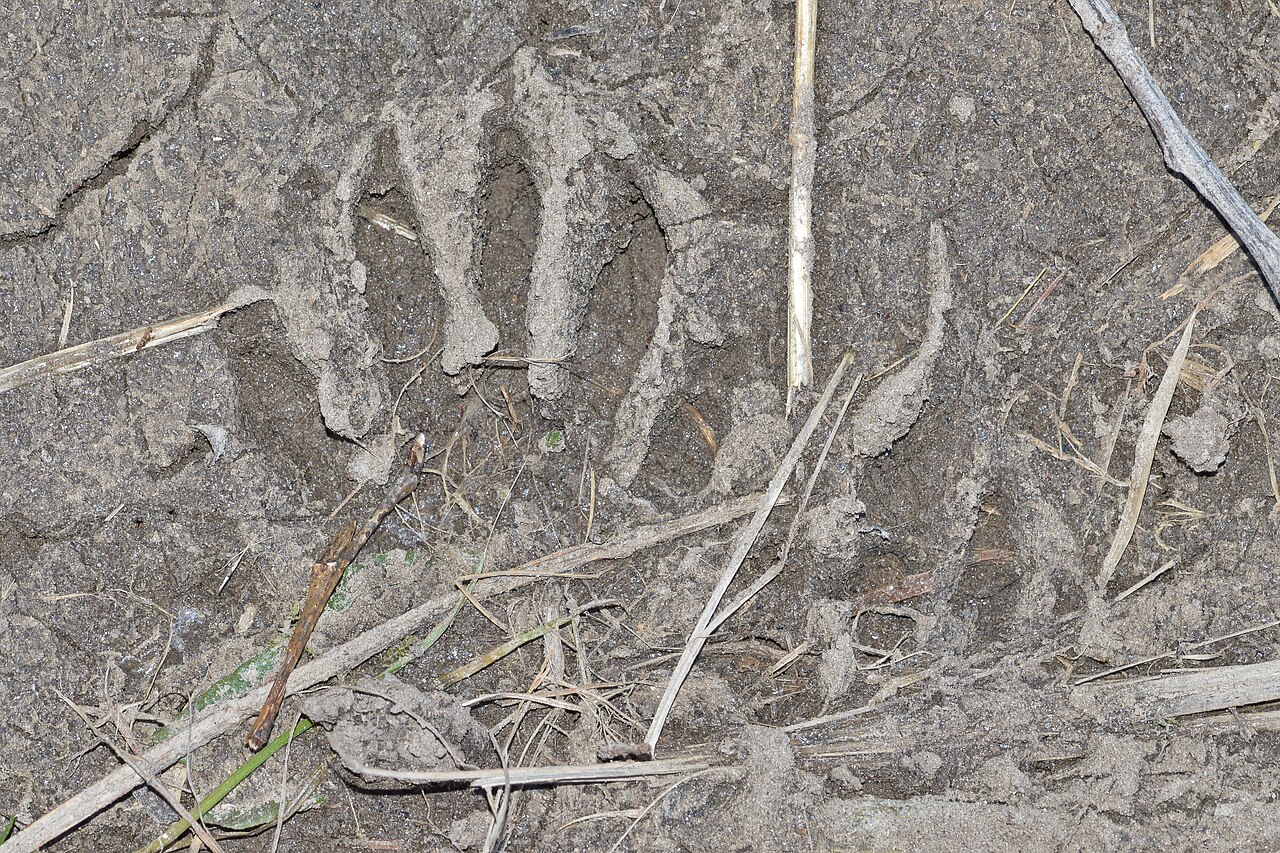 The paws most resembling human hands belong to raccoons. These black-masked explorers don’t merely traverse a landscape; they manipulate it–their five nimble fingers poking, probing, prying. Even insects and small rodents leave tracks, some so delicate that they resemble cross-stitching on the sand.
Over years of shadowing trackers across beaches, dunes and prairies, I’ve learned to pause at the glimpse of a print. I scan it from above, stoop beside it, sometimes place my hand next to it. It may seem that I am looking at mere scuffs in the soil. But in my imagination, I am watching a life unfold in the wild—one paw print at a time.